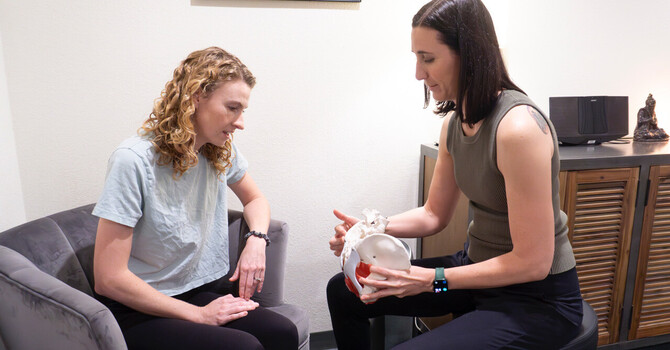
Pregnancy is one of the most incredible transformations the human body can undergo. In the span of nine months, your muscles, joints, ligaments, hormones, organs, breathing mechanics, and posture all adapt to support a growing baby.
Yet despite these huge changes, most pregnant people receive very little guidance on how to care for and support their bodies along the way.
In many countries, pelvic floor physical therapy is considered a standard part of prenatal care. My hope is that one day it becomes the standard here, too. Every pregnant person deserves education, support, and the tools to help them move through pregnancy feeling stronger, more comfortable, and more confident.
So what does pelvic floor physical therapy during pregnancy actually look like?
1. Helping You Feel Better During Pregnancy
One of the biggest misconceptions I hear is that pain and discomfort during pregnancy is "just part of being pregnant."
While some changes are certainly expected, that doesn't mean you have to simply suffer through them.
Pelvic floor physical therapy can help address many of the common aches and challenges that come with pregnancy, including:
- Low back and hip pain
- Pelvic girdle pain
- Pelvic pressure or pelvic organ prolapse
- Tailbone pain
- Constipation
- Urinary leaking, urgency & frequency
- Pain with intercourse
Every pregnancy is different, which is why treatment should be individualized to your body, your symptoms, and your goals by a skilled provider.
2. Building a Strong and Adaptable Core
Your core is so much more than your abdominal muscles.
It includes muscles like your diaphragm, deep abdominal muscles, pelvic floor, back muscles, and hips, all working together to support you throughout pregnancy.
As your body changes, these muscles have to adapt by improving strength and coordination, but also learning how to relax muscles that have been working overtime to compensate for some of these changes.
Our goal is to help support your body to support your growing baby while reducing unnecessary strain on your back, pelvis, and pelvic floor.
3. Teaching Your Pelvic Floor to Relax
Many people have heard that pelvic floor health means doing more Kegels.
But a healthy pelvic floor isn't simply strong. It also needs to know how to lengthen and relax, especially during a vaginal childbirth.
During pregnancy, we often work on breathing, mobility, stretching, and body awareness to help reduce tension in the pelvic floor. This can improve comfort throughout pregnancy while also preparing these muscles for birth.
4. Preparing Your Body for Labor and Birth
Birth preparation looks different for every person because every pregnancy and every birth is unique.
During pelvic floor physical therapy, we may practice labor positions, breathing strategies, pushing techniques, movement, and exercises that help you feel more prepared for delivery.
We'll also talk through different comfort measures and pain management strategies so you have a variety of tools available when labor begins.
The goal is to help you feel informed, confident, and prepared no matter how your birth unfolds.
5. Supporting You Beyond Delivery
One of my favorite parts of prenatal care is that it doesn't end when your baby arrives.
The education, awareness, and movement strategies you learn during pregnancy often make postpartum recovery feel much less overwhelming. You'll already understand your body, know how to reconnect with your core and pelvic floor, and recognize when something doesn't feel quite right.
Pregnancy isn't just preparing for one day of labor. It's preparing for the months and years that follow.
Every Pregnant Person Deserves This Care
We don't expect someone to run a marathon without preparing for it, yet we often expect people to navigate pregnancy, birth, and recovery with little guidance.
I believe every pregnant person deserves access to pelvic floor physical therapy.
My hope is that one day pelvic floor physical therapy becomes a routine part of prenatal care in the United States, just as it already is in many other parts of the world.
Until then, I'll keep educating, advocating, and helping one growing family at a time.
If you're pregnant, you don't have to wait until you're in pain to see a pelvic floor physical therapist. Whether your goal is to stay active, reduce discomfort, prepare for birth, or feel more confident in your changing body, I'm here to support you every step of the way.
Emily Mason
Contact Me